Desert National Wildlife Refuge
Desert National Wildlife Refuge is a 1.6 million-acre national wildlife refuge in Lincoln County, Nevada, established in 1936, run by the U.S. Fish and Wildlife Service as part of the Desert National Wildlife Refuge Complex. Hours: Enter 4:00 a.m. to sunset through the Corn Creek Road gate (exit any time); backcountry roads open 24 hours, every day of the year. Camping is allowed.
Check current closures and fire restrictions for Desert National Wildlife Refuge on the managing agency's own page.
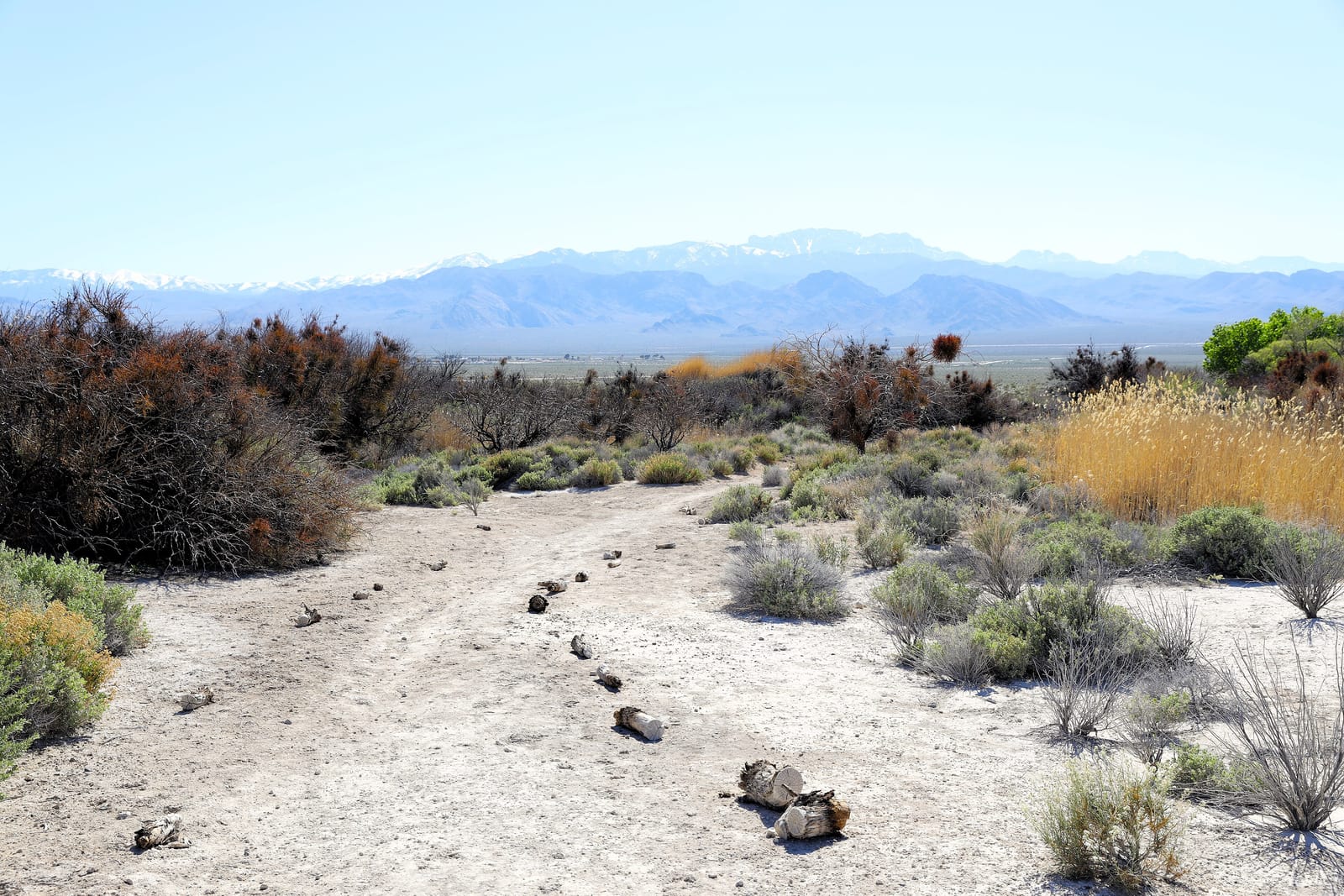
Desert National Wildlife Refuge map
Desert National Wildlife Refuge boundary from USGS PAD-US or the managing agency, simplified for display. Not for navigation or legal boundaries.
Closures
- The western half of the refuge is part of the U.S. Air Force Nevada Test and Training Range and is closed to the public (as of September 27, 2026). Current notice
Fire restrictions
One fire restriction order is recorded for this unit as of Sept. 30, 2026. Each links the signed order.
- Fire Restrictions in Effect as of May, 29, 2026 Stage 1 Fire Restrictions begin May 29, 2026 . For all current fire restrictions in effect in Southern Nevada please visit Nevada Fire Info . At Desert National Wildlife Refuge : All Stage 1 Fire restriction apply. No fires are allowed outside of the Desert Pass Campground. Visitors are required to use the provided fire rings at Desert Pass Campground. Rock rings and ground fires are prohibited.
Nevada Fire Info, BLM Nevada's interagency fire site, keeps the Nevada fire restrictions map and signed orders for every fire zone, and a Nevada fire map of active fires.
Common questions
- Yes. Hours at Desert National Wildlife Refuge: Enter 4:00 a.m. to sunset through the Corn Creek Road gate (exit any time); backcountry roads open 24 hours, every day of the year.
- Yes. Camping is allowed on Desert National Wildlife Refuge at 1 campground. There is no camping fee. Stays are limited to 14 days in any 28-day period. Car camping in existing turnouts along public access roads; backcountry camping at least 100 yards from springs and guzzlers.
- Yes. Hunting is allowed on Desert National Wildlife Refuge for big game and upland game birds. Where, per the refuge: Bighorn sheep by state-issued permit only; dove, chukar and quail only in the Sitting Dog Unit in the north of the refuge. Seasons, limits and methods are set by the refuge regulation and Nevada Department of Wildlife rules, which change every year: read them before you go.
- No. Fishing is not allowed on Desert National Wildlife Refuge. No swimming, washing, wading, or fishing in refuge waters and springs.
- Yes. Dogs are allowed on Desert National Wildlife Refuge on a leash. Three pet waste stations on the Corn Creek trail system.
- Yes. The refuge has 3 auto tour routes: Alamo Road, Mormon Well Road, and Gass Peak Road.
- No. Drones may not be launched, landed or flown on Desert National Wildlife Refuge.
Hours, fees, and visitor center
Hours at Desert National Wildlife Refuge: Enter 4:00 a.m. to sunset through the Corn Creek Road gate (exit any time); backcountry roads open 24 hours, every day of the year.
- Corn Creek Visitor CenterThu-Mon: 8 a.m. to 4 p.m.16001 Corn Creek Road, Las Vegas, NV 89124-8402702-879-6110
What visitors do here: wildlife viewing, birding, photography, hiking, an auto tour route, camping, hunting, horseback riding, environmental education, interpretive programs.
Sources: fws.gov/refuge/desert/visit-us/rules-policies, checked 2026-09-27; fws.gov/refuge/desert/visit-us, checked 2026-09-27; fws.gov/refuge/desert/visit-us/activities/birding, checked 2026-09-27.
Auto tour routes
- Alamo Roadhigh clearanceOver 70 miles to Pahranagat NWR and Alamo; the Dry Lake portion is often impassable and closed
- Mormon Well Road47 mi, high clearanceThrough Desert Pass to US-93 near State Highway 168; the full route may be closed due to hazardous conditions
- Gass Peak Roadhigh clearanceOut and back through the Las Vegas Range off Mormon Well Road; 4WD needed beyond Quail Springs Road, about 9 miles in
Source: fws.gov/refuge/desert/visit-us/activities/auto-tour, checked 2026-09-27.
Wildlife
- MammalDesert bighorn sheepWhen: winter, at lower elevationsThe refuge was established for it; active by day and seen around waterholes in the heat of summer
- BirdMigratory birdsWhen: spring and fall, morning hoursGrosbeaks, tanagers, herons and egrets at Corn Creek, on the Pacific Flyway; over 320 bird species recorded
- Fish, endangeredPahrump poolfishKept in the refugium and pond on the Corn Creek trails
- Reptile or amphibianDesert tortoiseWhen: springBecomes active as it comes out of brumation in spring
- BirdGolden eagle
- BirdGreater roadrunner
- Reptile or amphibianSidewinder
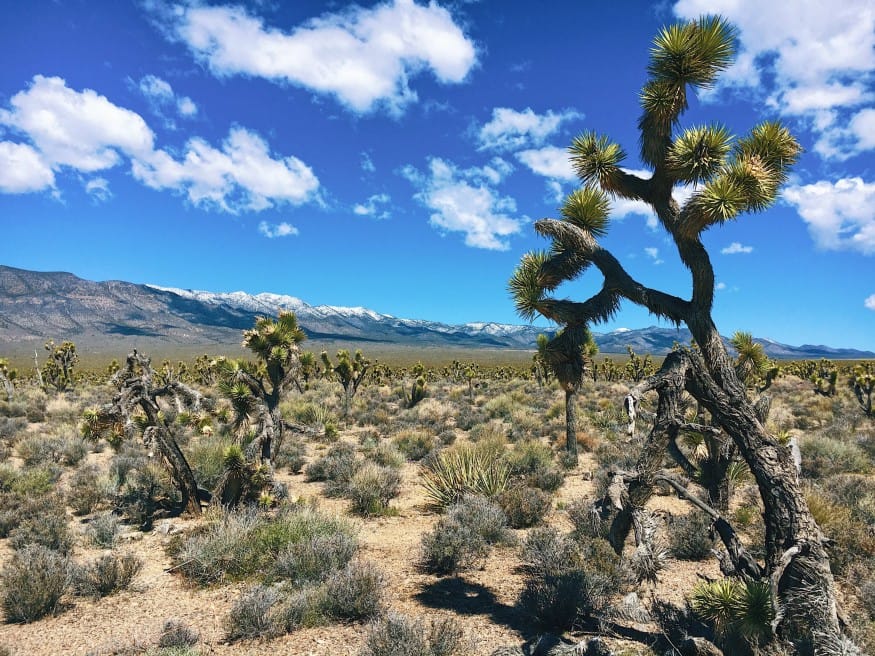
- PlantJoshua tree
- PlantBristlecone pineGrows on Hayford Peak, the refuge's highest point
- MammalCoyotes, bobcats and badgersWhen: fallCrepuscular wildlife often seen earlier in the day as temperatures cool
Source: fws.gov/refuge/desert/visit-us/activities/wildlife-watching, checked 2026-09-27.
Hunting
Hunting is allowed on Desert National Wildlife Refuge for big game and upland game birds. Where, per the refuge: Bighorn sheep by state-issued permit only; dove, chukar and quail only in the Sitting Dog Unit in the north of the refuge. Seasons, limits and methods are set by the refuge regulation and Nevada Department of Wildlife rules, which change every year: read them before you go.
Hunting rules for Desert National Wildlife Refuge
Source: fws.gov/refuge/desert/visit-us/activities/hunting, checked 2026-09-27.
Fishing and boating
Fishing is not allowed on Desert National Wildlife Refuge. No swimming, washing, wading, or fishing in refuge waters and springs.
Source: fws.gov/refuge/desert/visit-us/rules-policies, checked 2026-09-27.
Camping
Camping is allowed on Desert National Wildlife Refuge at 1 campground. There is no camping fee. Stays are limited to 14 days in any 28-day period. Car camping in existing turnouts along public access roads; backcountry camping at least 100 yards from springs and guzzlers.
Campfires: Campfires only in established areas with your own firewood; prohibited in the backcountry, including Hidden Forest Cabin.
Sources: fws.gov/refuge/desert/visit-us/activities/camping, checked 2026-09-27; fws.gov/refuge/desert/visit-us/rules-policies, checked 2026-09-27.
Pets
Dogs are allowed on Desert National Wildlife Refuge on a leash. Three pet waste stations on the Corn Creek trail system.
Source: fws.gov/refuge/desert/visit-us/activities/dog-walking, checked 2026-09-27.
Trails
- Bighorn Loop TrailOpen desert with Sheep Range views and a geology overlook; wheelchair friendly
- Birdsong Loop TrailQuiet single track through mistletoe-laden mesquite; birding
- Coyote Loop TrailPast the pond, historic orchard, Pahrump poolfish refugium and railroad tie cabin; wheelchair friendly
- Jackrabbit Loop TrailPasses the pool where Corn Creek rises from the aquifer; wheelchair friendly
- Whispering Ben TrailShort spur to a limestone mortar the Nuwuvi (Southern Paiute) used to grind grains and mesquite pods
- Gass Peak TrailRugged, unmaintained backcountry route needing map and route finding; summer hiking not advised
- Hidden Forest TrailUp the Deadman Wash canyon through three life zones to Hidden Forest Cabin among ponderosa pine
Source: fws.gov/refuge/desert/visit-us/trails, checked 2026-09-27.
Places on the refuge
- SpringCorn CreekSpring-fed creek and pond behind the visitor center; one of the best spots in southern Nevada for migratory birds
- Historic siteRailroad tie cabin1920s cabin built by the Richardson family from Las Vegas & Tonopah Railroad ties, still marked by spike scars
- Historic siteRichardson orchardFruit and nut trees planted by the Richardson family, who ranched at Corn Creek from 1916 to 1936
- Viewing areaPahrump poolfish refugiumAquarium-like building on the Corn Creek trails housing the endangered Pahrump poolfish
- Historic siteHidden Forest CabinHistoric log cabin among ponderosa pine; trailhead at Deadman Canyon, about 16 miles north of Corn Creek; no campfires
- SpringWiregrass SpringNear Hidden Forest Cabin; the only refuge spring visitors may draw water from, and it must be purified
- OverlookHayford PeakHighest point in the refuge at 9,924 feet, a strenuous 2.5 mile hike from Hidden Forest Cabin
- OverlookGass PeakHighest point of the Las Vegas Range at 6,943 feet, with views of Las Vegas and the wilderness to the north
- PlaceFossil RidgeOutcrop of Devonian rocks with visible fossils, about 4.5 miles from Corn Creek
Source: fws.gov/refuge/desert/visit-us, checked 2026-09-27.
Getting there
- A high-clearance vehicle is recommended.
- Limited cell service
Source: fws.gov/refuge/desert/visit-us, checked 2026-09-27.
Public lands next to Desert National Wildlife Refuge
- National wildlife refugeDesert National Wildlife Refuge borders Pahranagat National Wildlife Refuge.
- National Park Service unitDesert National Wildlife Refuge borders Tule Springs Fossil Beds National Monument.
- Wilderness areaDelamar Mountains Wilderness is 0.8 miles away, straight line between the two boundaries.
- State parkIce Age Fossils State Park is 0.8 miles away, straight line between the two boundaries.
- Wilderness areaArrow Canyon Wilderness is 1 mile away, straight line between the two boundaries.
- BLM unitRed Rock Canyon National Conservation Area is 1.6 miles away, straight line between the two boundaries.
Measured between the units' boundaries as mapped in USGS PAD-US. Distances are straight line, not driving.
Photos
- https://www.fws.gov/refuge/desert (accessed 2026-09-27)
- https://www.recreation.gov/camping/gateways/1376 (accessed 2026-09-27)
- https://www.fws.gov/refuge/desert/visit-us (accessed 2026-09-27)
- https://www.fws.gov/refuge/desert/about-us (accessed 2026-09-27)
- https://www.fws.gov/refuge/desert/visit-us/rules-policies (accessed 2026-09-27)
- https://www.fws.gov/refuge/desert/visit-us/trails (accessed 2026-09-27)
- https://www.fws.gov/refuge/desert/visit-us/activities/auto-tour (accessed 2026-09-27)
- https://www.fws.gov/refuge/desert/visit-us/activities/hunting (accessed 2026-09-27)
- https://www.ecfr.gov/current/title-50/chapter-I/subchapter-C/part-32/section-32.47 (accessed 2026-09-27)
- https://www.fws.gov/refuge/desert/visit-us/activities/camping (accessed 2026-09-27)
- https://www.fws.gov/refuge/desert/visit-us/activities/dog-walking (accessed 2026-09-27)
- https://www.fws.gov/refuge/desert/visit-us/activities/wildlife-watching (accessed 2026-09-27)
- https://www.fws.gov/refuge/desert/visit-us/activities/birding (accessed 2026-09-27)
- https://www.fws.gov/refuge/desert/species (accessed 2026-09-27)
- https://www.fws.gov/refuge/desert/contact-us (accessed 2026-09-27)
- https://commons.wikimedia.org/wiki/Category:Desert_National_Wildlife_Refuge (accessed 2026-09-27)